It’s easy to think of digital life as weightless. No packaging, no shipping, no physical product in your hand. You open an app and watch something, and it feels like nothing. But every stream you watch, every playlist you run in the background, every video call you take is moving data through a global network of servers, cables, and devices that all require energy to run. Most of that energy still comes from fossil fuels.
So does streaming actually have a meaningful environmental impact? The honest answer is: it’s complicated, and the numbers have been contested, but it’s definitely not nothing.

The internet and all its associated infrastructure including data centers, network equipment, and user devices accounts for somewhere around 3 to 4 percent of global greenhouse gas emissions as of 2026, comparable to the aviation industry. Video streaming accounts for more than 60 percent of global internet traffic, which means it represents a significant slice of that footprint.
In more concrete terms, the Carbon Trust estimates that streaming one hour of video generates approximately 55 grams of CO₂ equivalent. For context, that’s roughly the same as driving a car about 220 meters. Streaming all eight seasons of Game of Thrones, approximately 71 hours in total, generates similar emissions to driving a car about 16 kilometers. That sounds manageable until you consider how many millions of people watched the series. At that scale, the numbers get very large very quickly.
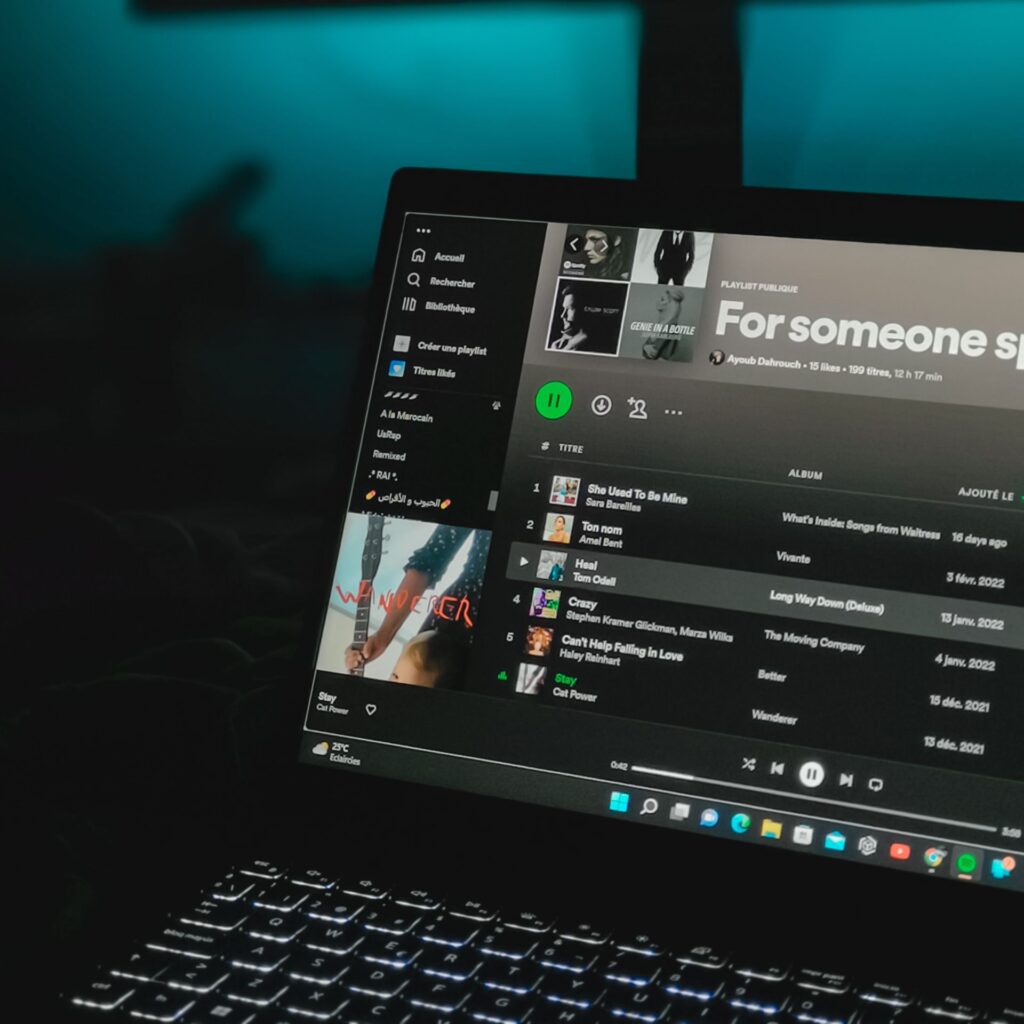
Music streaming has a lower impact per hour than video since it transfers far less data, but it adds up through sheer volume of use. Spotify’s 2025 Equity & Impact Report puts its total greenhouse gas emissions at approximately 202,666 metric tons of CO₂ equivalent, up 3.9% from 2024. This includes the company’s entire value chain, not just music streaming, but it gives an idea of the environmental footprint behind one of the world’s biggest streaming platforms.
Where the emissions actually come from
There are three parts of the streaming chain: the data center storing and serving the content, the network infrastructure transmitting it, and the device you’re watching on. Interestingly, user devices, meaning your television, laptop, or phone, account for the largest share of streaming’s energy use, not the servers. A large smart TV uses significantly more electricity than a laptop or phone, which matters when you’re thinking about your own footprint.
The electricity grid you’re on also matters enormously. Streaming in Norway, where almost all electricity comes from hydropower, has a dramatically lower carbon footprint than streaming in Germany, which still relies significantly on coal and gas. The Carbon Trust puts Germany’s streaming footprint at 76 grams of CO₂ per hour, compared to a European average of 55 grams.
Does it matter compared to other things?
To be fair about this: flying once across the Atlantic produces more emissions than several years of average streaming use. The carbon footprint of your diet, particularly how much animal product it contains, dwarfs your streaming habits. This isn’t an argument to ignore streaming’s footprint, but it is an argument for proportion. If you’re trying to reduce your environmental impact, changing your diet and flying less will get you much further than worrying about your Netflix subscription.
That said, there are a few really easy wins if you want to reduce your digital footprint without much sacrifice. Watching at lower resolution makes a surprising difference: dropping from 4K to HD can cut streaming emissions by up to 75%, since data transfer drops dramatically. Watching on a phone or laptop rather than a large television reduces device energy use. And turning your camera off during video calls can reduce emissions by up to 25 times compared to a video-on call, because video is so much more data-intensive than audio.
The bigger picture is that the energy grid getting cleaner over time will reduce streaming’s footprint far more than any individual choice. As renewable energy replaces fossil fuels in the electricity mix, digital services automatically get cleaner without you personally having to do anything differently. Which is a good argument for prioritizing clean energy policy, but that’s another topic for another day.