Disclaimer: Some of the links in this post are affiliate links. If you buy something through them, I may earn a small commission (at no extra cost to you).
I’ve slowly been turning my kitchen into a low-waste space, and switching out sponges ended up being one of the simplest changes. Traditional kitchen sponges are made from plastic (usually polyurethane), which means they break down into microplastics and can take hundreds to even thousands of years to decompose. It’s one of those products we use every day without ever thinking about what happens after we toss them out.
Biodegradable sponges are basically the opposite of all that: they’re made with simple materials, gentle on dishes, and SO much kinder to the planet. Most are made from natural fibers like cellulose, loofah, wood pulp, or coconut husk. They’re durable, compostable, and honestly, they just feel way nicer to use.
Below are some of my favorite options – go give them a try!
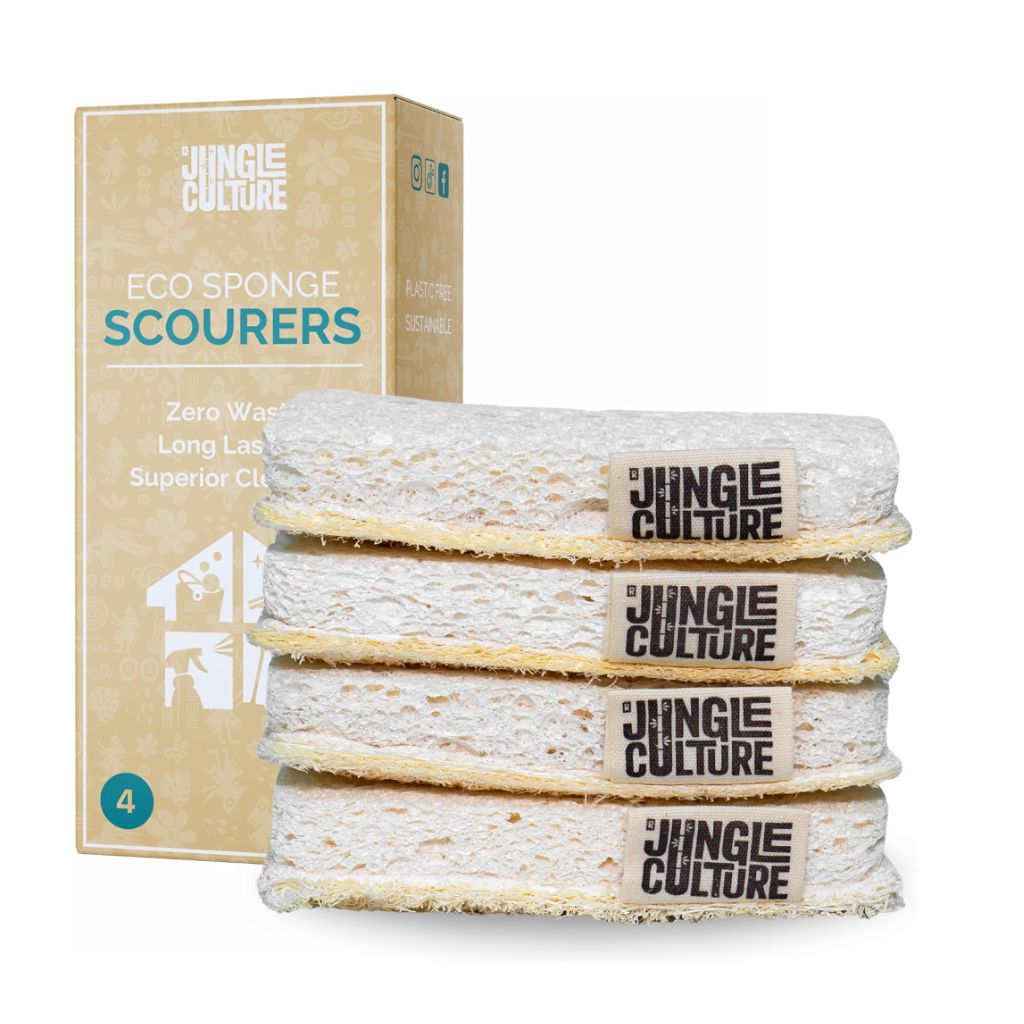
I’ve been using Jungle Culture’s compostable kitchen sponges in my own kitchen, and they strike such a nice balance between softness and scrub power. They’re made from a blend of plant fibers (cellulose + loofah), so they foam up well but still feel sturdy enough to get through a stack of messy pots. And I love that they don’t get that usual “plastic sponge smell” after a week.
Materials: cellulose + natural loofah
Price range: around $12 for a 4-pack
🌍 Ships worldwide through their website and also through a few eco shops online.
2. Seep
These “Eco Sponge Scourers” have a nice feel in the hand – soft cellulose on one side and a plant-fiber scrubber on the other. A good all-rounder if you prefer a two-texture sponge.
Materials: cellulose + loofah or sisal fiber
Price range: around $18 for a pack of 4
🌍 UK-based brand with wider EU shipping; some global stockists carry them too.
3. Public Goods
These cellulose sponges feel the closest to a classic yellow-and-green sponge, just without the plastic. They’re lightweight, simple, and good for daily, low-effort dishwashing. Plus, they dry quickly between uses, which helps prevent odors and keeps them lasting longer than traditional sponges.
Materials: 100% vegetable cellulose
Price range: around $18 for a 12-pack
🌍 US shipping through Public Goods’ site; international availability varies.
These cellulose scrubber sponges are a nice everyday option if you want something uncomplicated and fully compostable. They’re soft, absorbent, and great for wiping down surfaces without streaks.
Materials: 100% wood pulp
Price range: around $6 for a 2-pack
🌍 Available in the US and Canada
5. EcoCoconut
These look a bit tougher than standard sponges, and they are – but in a good way. They’re made from coconut coir fibers bound with natural rubber, so they’re perfect for scrubbing without scratching. I find them especially handy for cookware.
Materials: coconut coir + natural rubber
Price range: around $6 for a 2-pack
🌍 Ships to many regions; Europe, US, UK, Australia commonly stocked.
6. Papaya
These are a little different: they’re thin, beautifully-patterned sponge cloths made to replace rolls of paper towels and stacks of sponges at the same time. They last months, dry quickly, and can go in the dishwasher for a refresh.
Materials: cellulose + cotton
Price range: around $50 for a 6-pack
🌍 US-based, ships internationally; often stocked by eco shops.
7. Safix
If you need something more textured but still fully biodegradable, these coconut fiber scrub pads are great. They’re rough when dry but soften slightly with water, and they hold up well with heavy scrubbing.
Materials: coconut fibers + organic binder
Price range: around $3 per pad
🌍 Based in the UK, but commonly available in eco shops worldwide.
8. CleanGang
CleanGang’s sponges are a nice option if you want something plant-based but a bit more durable than the standard cellulose squares. Their “Eco Sponges” are made from natural cellulose and coconut fibers, so they have that gentle-soft side for everyday dishes and a textured side that handles stuck-on food without scratching. They also dry out faster than traditional sponges, which helps avoid the icky smell that builds up in plastic ones.
Materials: natural cellulose + coconut fiber
Price range: around $5-6 for a 2-pack
🌍 Ships across Europe through their website
9. EcoLiving
ecoLiving makes a whole range of simple, plant-based cleaning tools, and their sponges are easy to swap in if you want something fully biodegradable. Their classic compostable sponges are made from natural cellulose and cotton, so they feel familiar to use but break down naturally when you’re done with them. They’re soft, absorbent, and great for day-to-day dishes.
They also offer sturdier loofah-style scrubbers and those lightweight cotton-cellulose sponge cloths that work almost like reusable paper towels. Everything stays firmly in the plastic-free, vegan, low-impact lane, which is why they’re such a go-to in the zero-waste community.
Materials: cotton, natural cellulose, flax (plastic-free and compostable)
Price range: around $4-5 depending on product
🌍 UK-based, with wider EU shipping and some global stockists carrying their products.
Another Option: Natural Loofah Dish Sponges
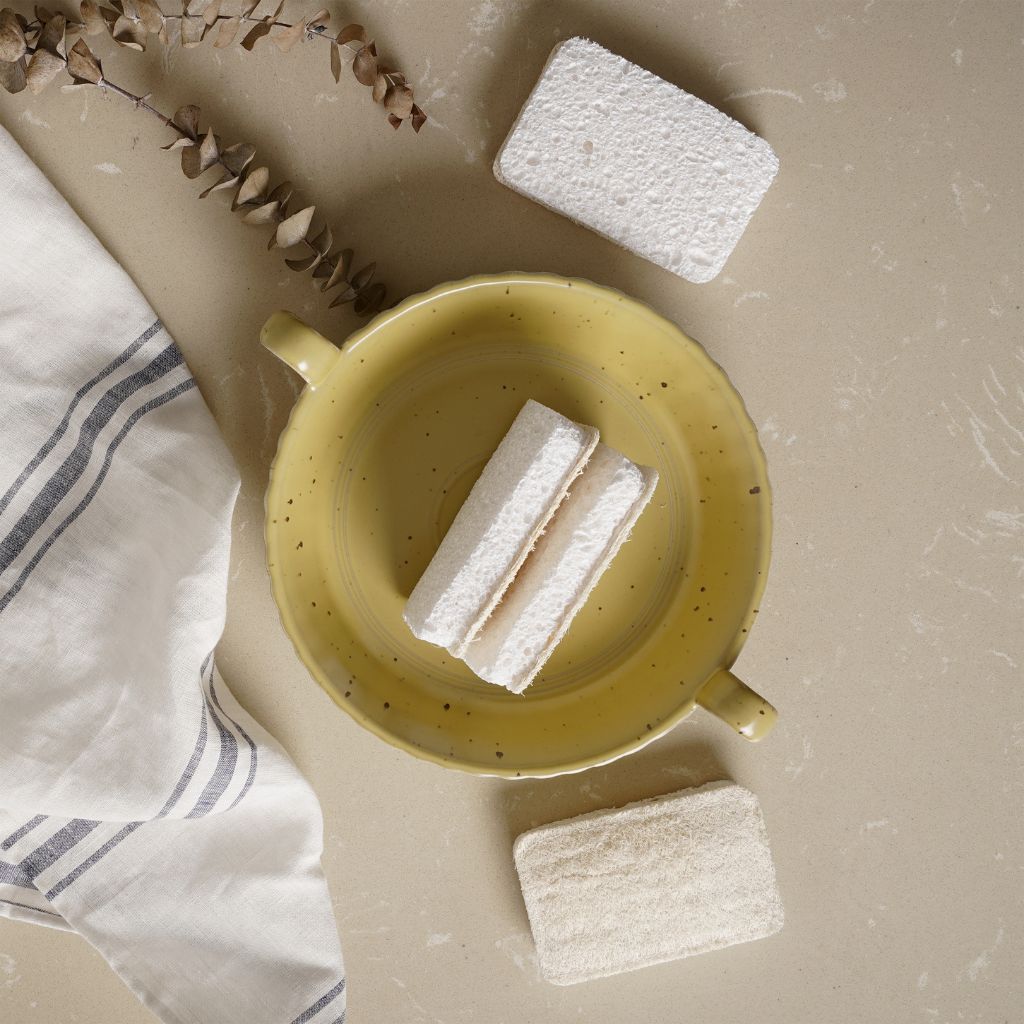
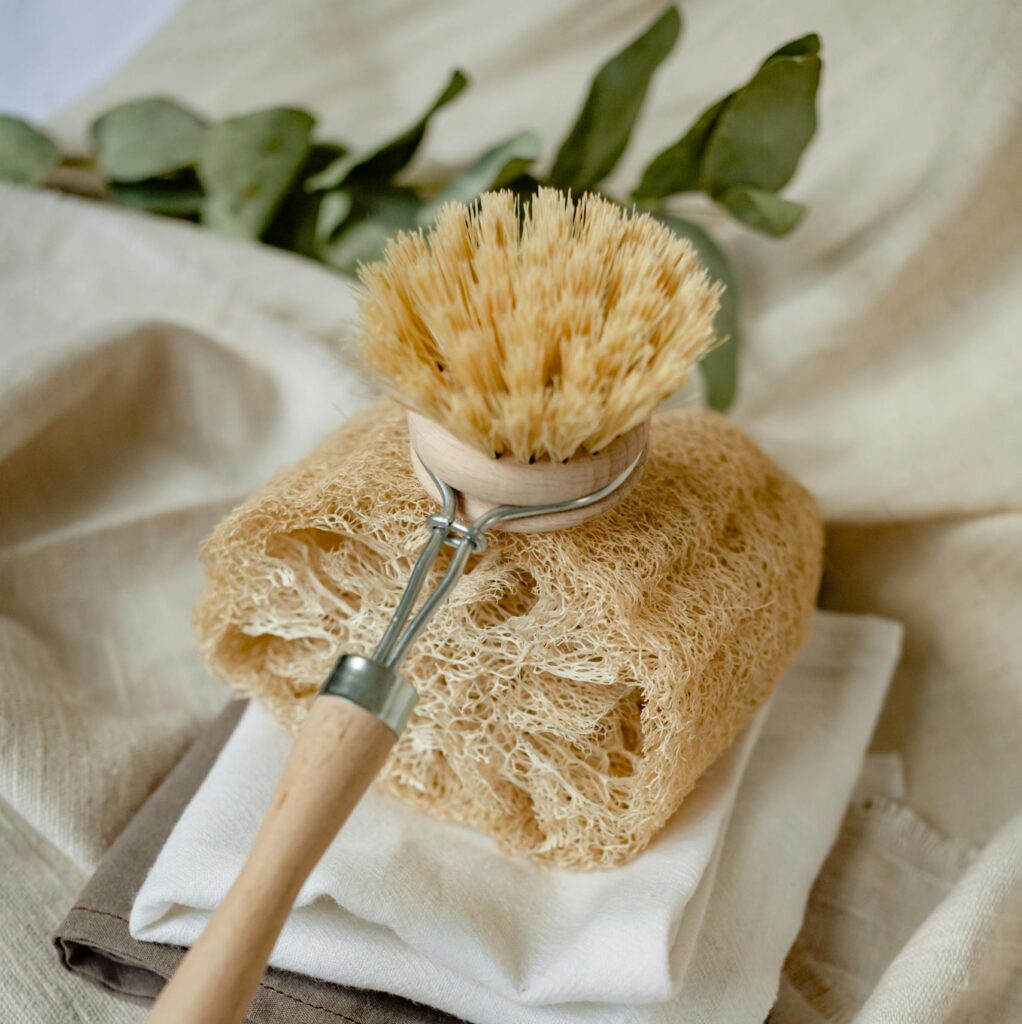
Natural loofahs come from the fibrous interior of the loofah gourd, which is dried and cut into sponge-sized pieces. They have a gentle but effective scrubby texture that softens with use, and they’re great for everyday dishes or anything with a bit of stuck-on food. One of the nicest things about loofahs is how quickly they dry. They don’t get that damp smell, and when they eventually wear out, you can compost them instead of throwing away another plastic sponge.
If you want to try one, you’ll find them in most zero-waste shops. A few sustainable brands that offer untreated, plastic-free loofahs include many of the brands mentioned above, as well as Guppyfriend and Iberluffa.
Why it Has a Bigger Impact than You’d Think
Dish sponges are one of those everyday items that tend to fly under the radar. But most households go through multiple sponges every month, which adds up to millions of tiny plastic-based cleaning tools ending up in landfills or waterways. Plant-based sponges skip the microplastics completely and return safely to the earth once you’re done with them.
If you’re already trying to green your home, this is one of those changes that feels surprisingly satisfying. They’re small, affordable, and something you’ll use every day. Happy scrubbing!